Good violin making does not depend solely on “genius”; it requires daily discipline, years of practice, meticulous craftsmanship, sound knowledge, and a keen ear.
My work as an artist and sound researcher finds expression in the meticulous selection of acoustically exceptional woods, model development, tonal refinement, sensitive sound adjustment, and, last but not least, the artistic lacquering. In this process, I use pigments and lacquers based on my own formulas and produced by me.
Your hands must be empty, like a receiving bowl; only then can you touch the wood, and only then does the tool acquire its own intelligence, because you stop forcing things.
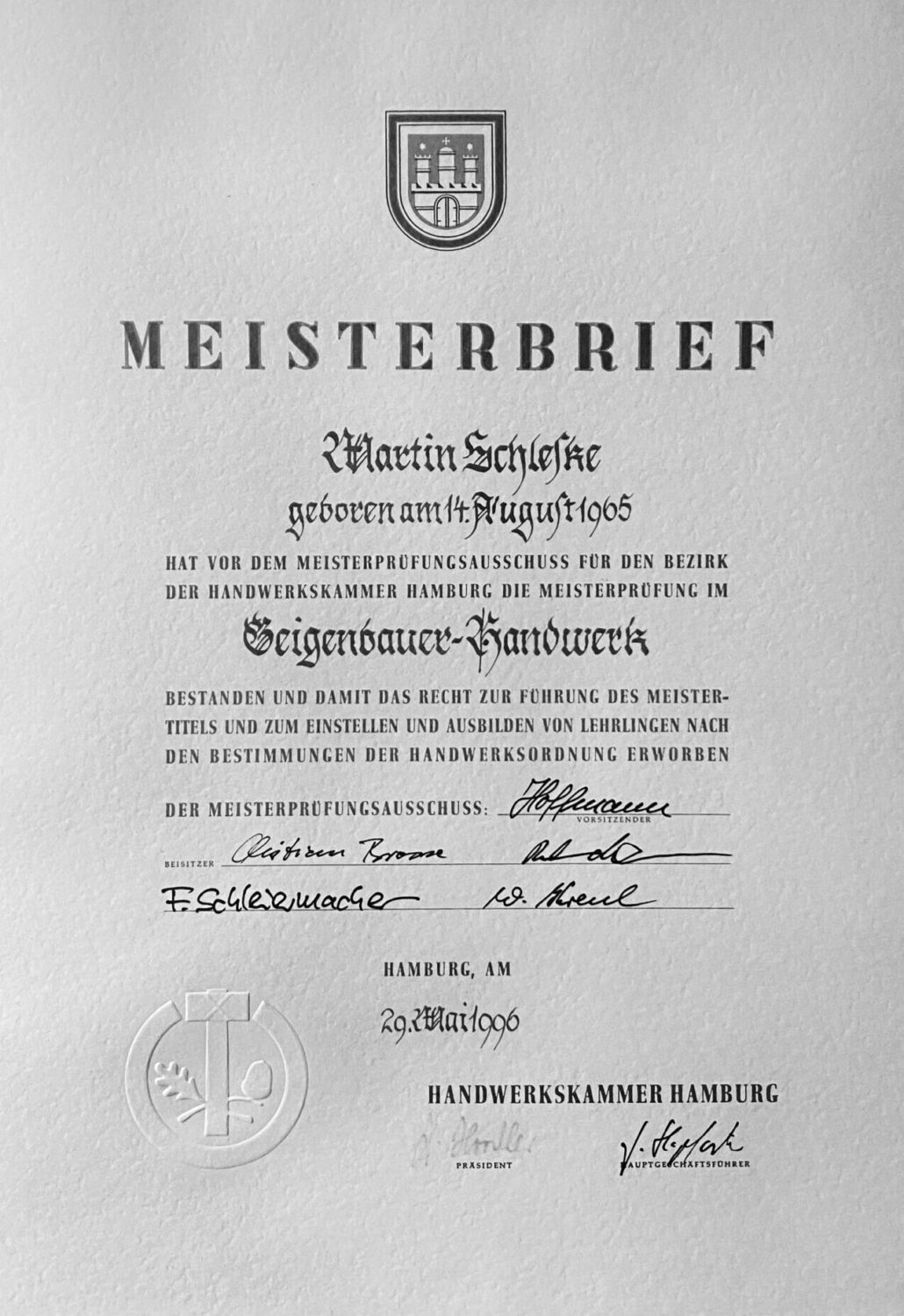
Planing and finishing the curve
The Model
For the first twelve years after passing my master’s examination, I focused entirely on historical models with great care. Through decades of meticulous work at the workbench and in the laboratory, I uncovered their acoustic secrets. It wasn’t until years later that I began to develop my own design language and sonic signature: my model.
The shape of the violin’s outline is based on circular segments that interlock at deliberately placed inflection points. This fundamental principle can be learned from the buildings of the famous architects of that era. I recognized this principle in the architecture of Balthasar Neumann, a contemporary of Antonio Stradivari. His architecture reflects a fundamental principle of the aesthetics of that era: the principle of the harmony of opposites. Familiarity and surprise form a pair of opposites that underlies the perfect form.
The fundamental concept of the harmony of opposites is reflected in both the theory of composition and the architecture of that era. The violin makers of the Golden Age were certainly familiar with this design principle. Accordingly, they shaped their violins using circular segments that touched tangentially and their points of intersection. In the centuries that followed, as the great violin makers were merely copied by manufacturers in the wake of industrialization, this fundamental aesthetic concept fell into oblivion.
The artistic philosophy of my workshop is therefore not to copy, but to carry the idea forward.
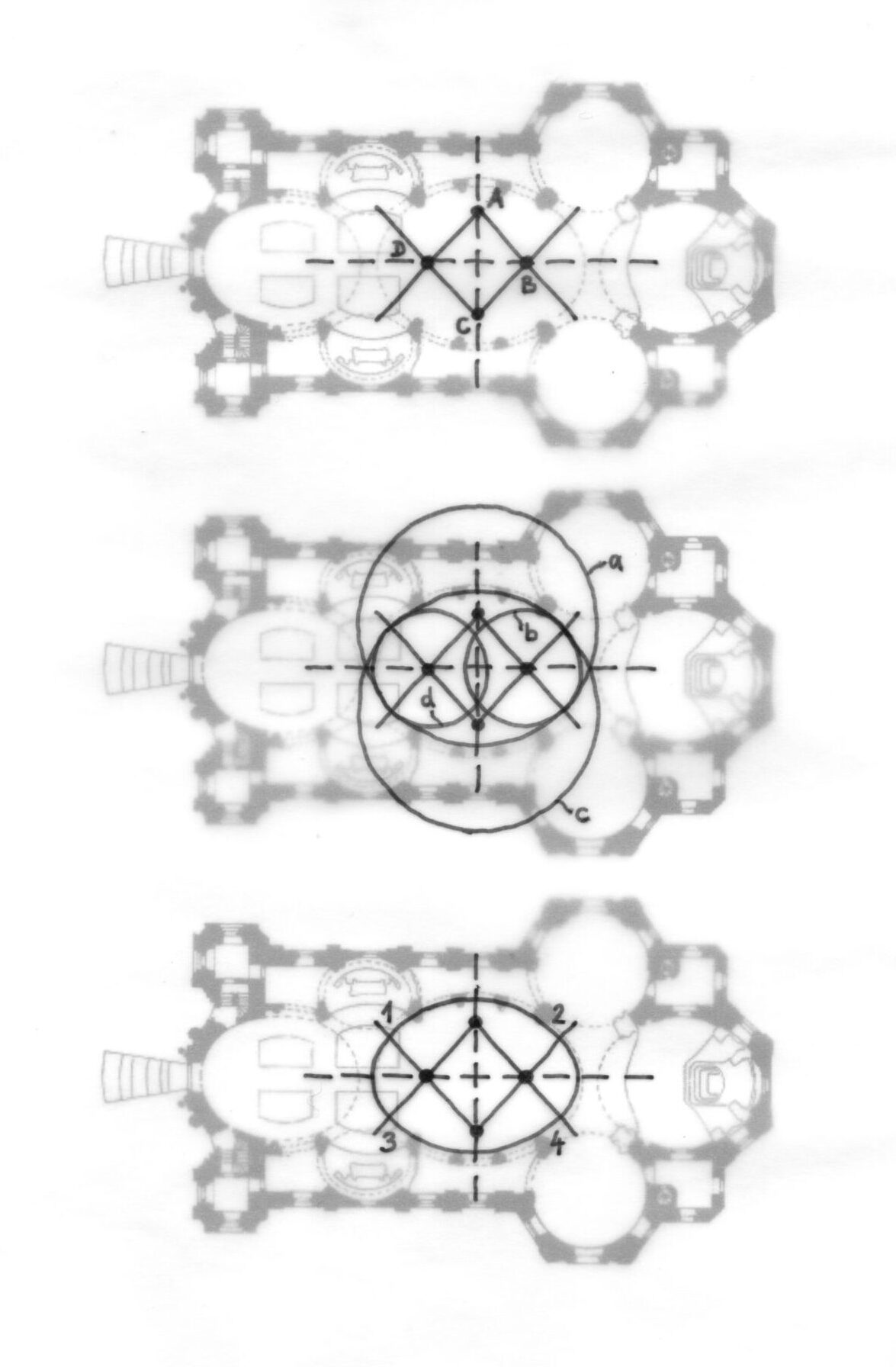
Reconstructing the outline of the Basilica of the Fourteen Holy Helpers by Balthasar Neumann (1687–1753) helped me understand key principles underlying Stradivari’s outlines. It is the interplay between familiarity and surprise—typical of this era—that finds expression in circular elements and dramatic points of transition. For further details, see Martin Schleske: “Der Klang – Vom unerhörten Sinn des Lebens” (Chapter 3), 352 pages, Munich 2010.
The Wood
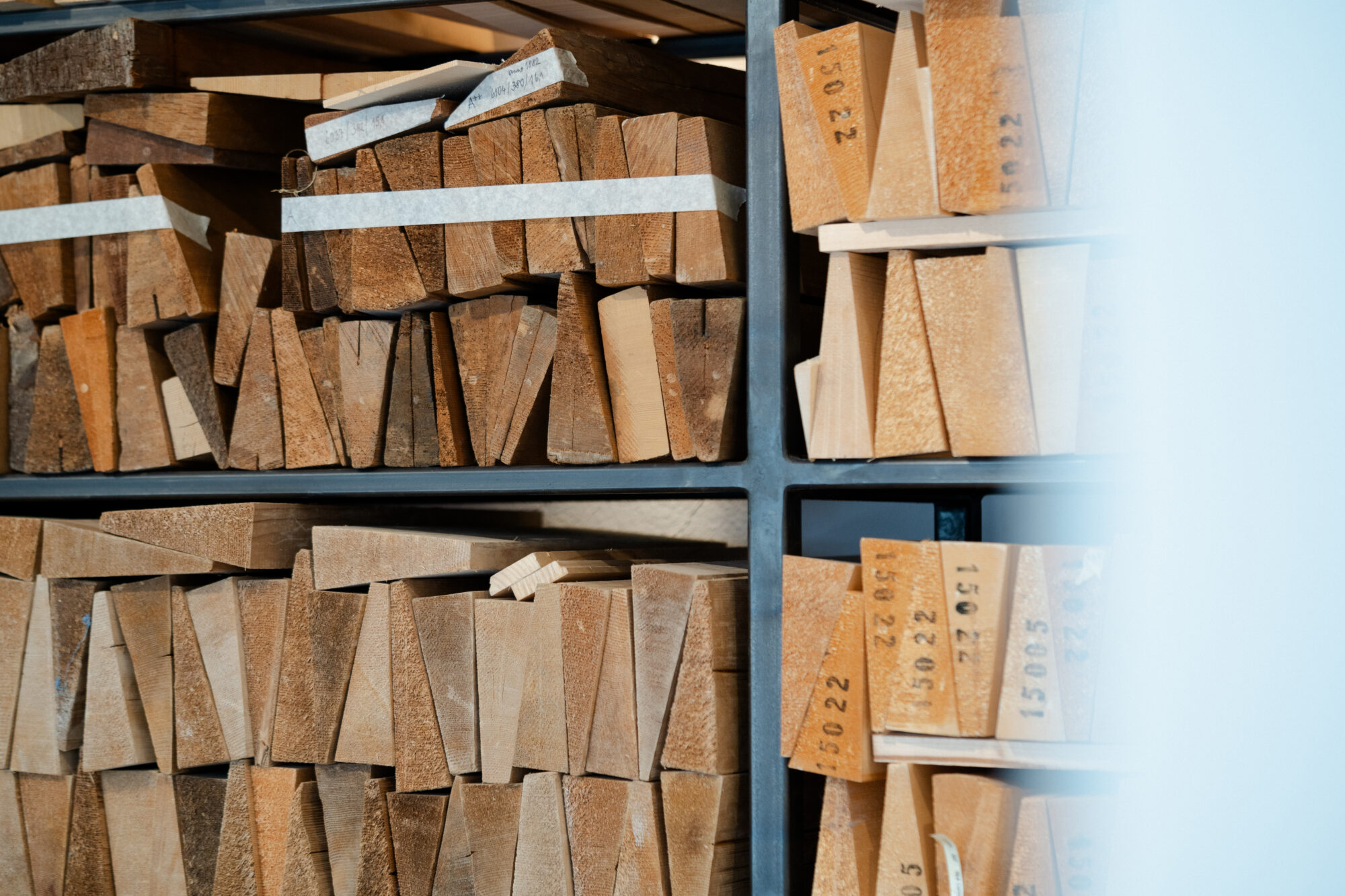
I have the privilege of working with extraordinary, centuries-old lines of singers. Every fiber contained a sacred will to live, which gave rise to what I am able to transform into sound with my hands at my workbench over the course of weeks. The wood speaks to me through its resonances. Without reverence, no good sound can be produced.
Some of the exceptional pieces of wood I use for my violin tops were harvested a long time ago. These spruce blocks were stored for over six generations in the workshop of an old master violin maker in Zurich. His great-grandfather had harvested the wood—which I use for the particularly valuable violins in my workshop—in Davos in 1884. Ever since then, they have been waiting to be transformed into violins. Over the years, these pieces of wood have developed a unique golden texture and possess a distinct tone. They are the particularly precious, golden gems of my work in terms of sound.
The Paint Job
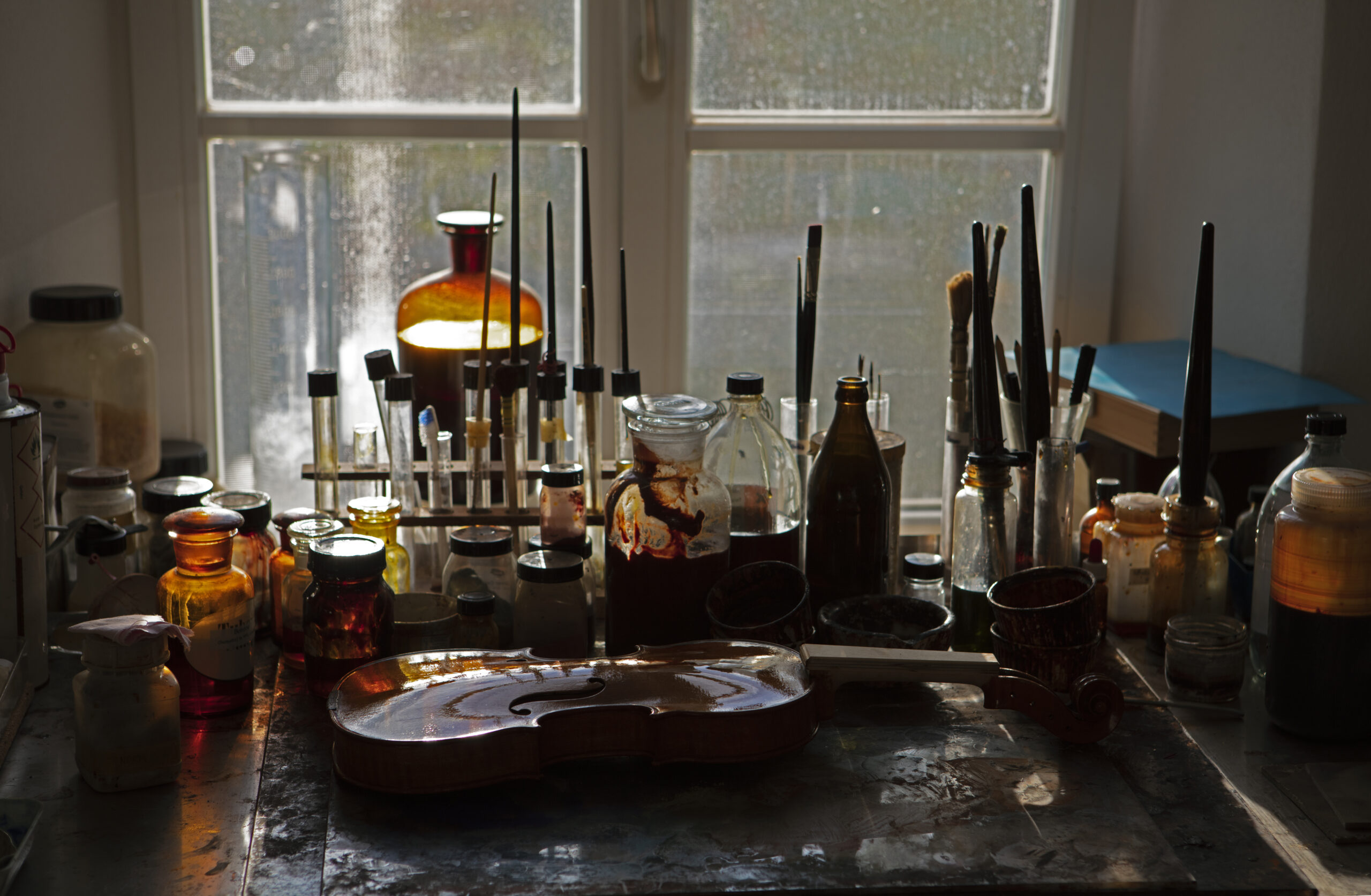
The construction of a violin is brought to completion with the varnishing process. In the varnishing workshop on the second floor of our workshop building, the violin becomes a work of art. Varnishing the instrument using traditional recipes, homemade pigments derived from madder root, and all those fine natural resins is always a reward for me after the many hundreds of hours spent at the workbench. In this artistic process, time stands still.
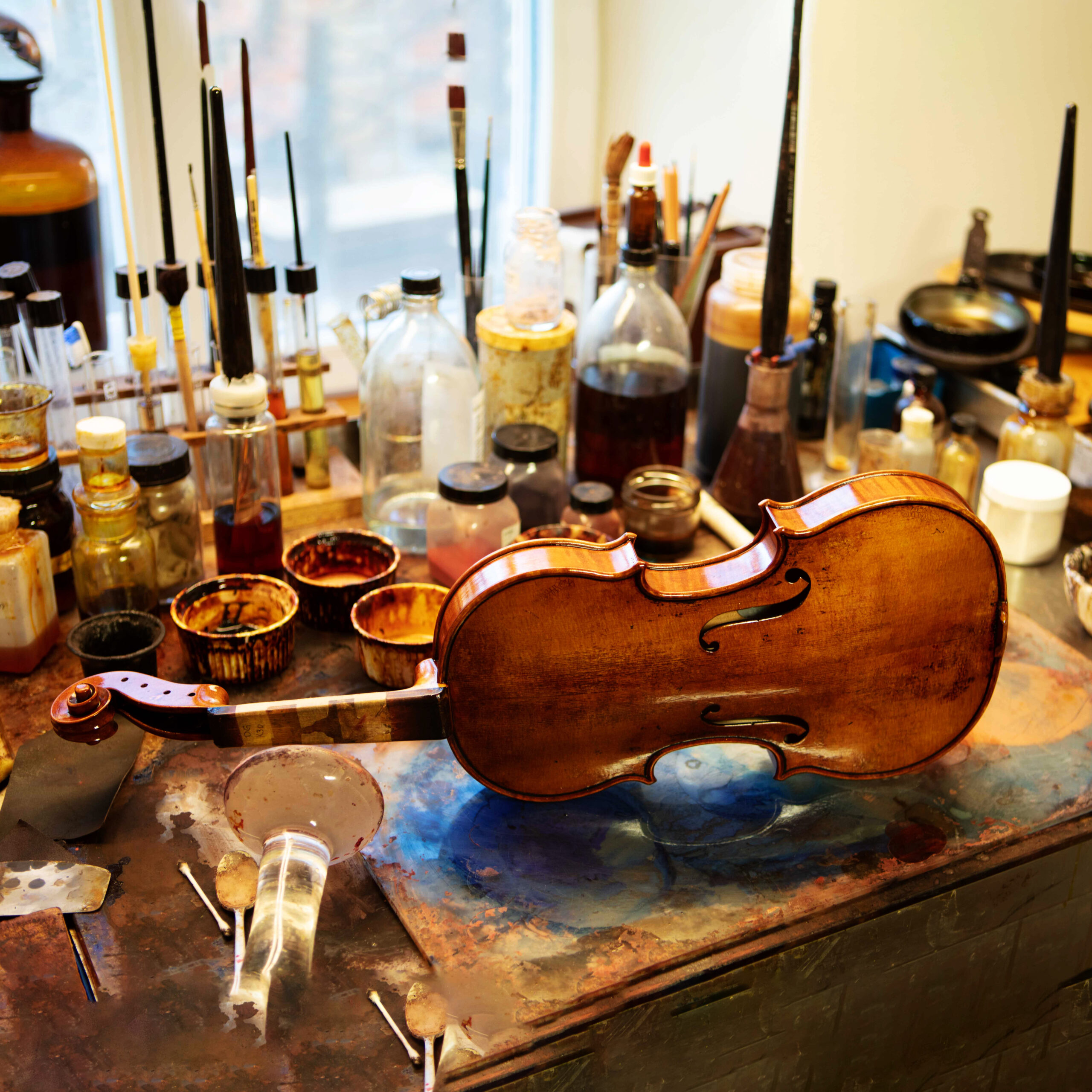
The fact that a blue pigment is also partially visible on the glass plate beneath the glass runner is significant: at intervals, the bright orange in the paint structure—comprising about 20 layers—must be optically tempered by its complementary counterpart—a wafer-thin layer of blue. Otherwise, the orange becomes garish, fanatical, and vulgar. In some layers it must be accelerated; in others, slowed down. Harmony of opposites: that is what I learned from the old Flemish school of painting (15th/16th century).
Varnishing the Cello, Op. 357
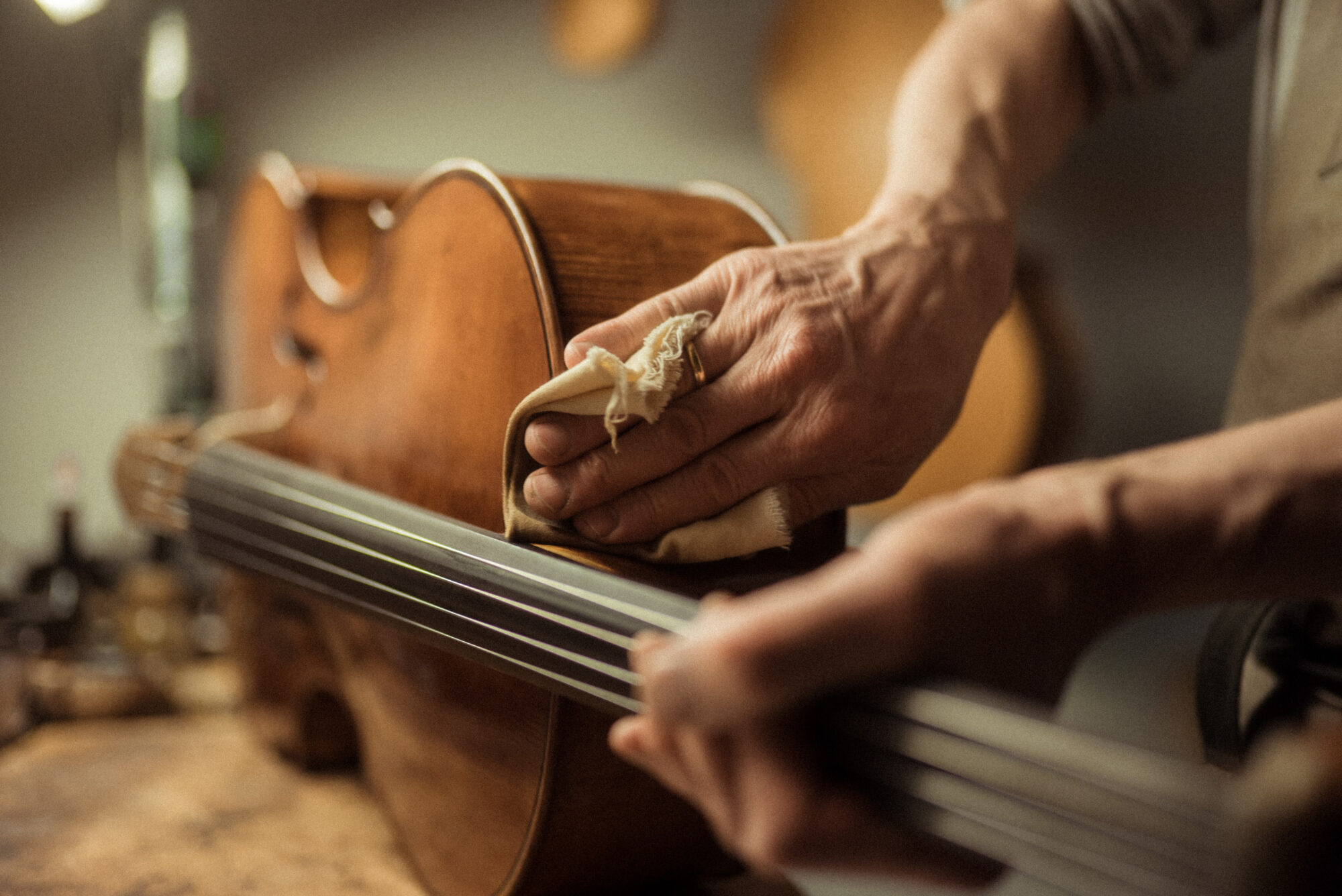
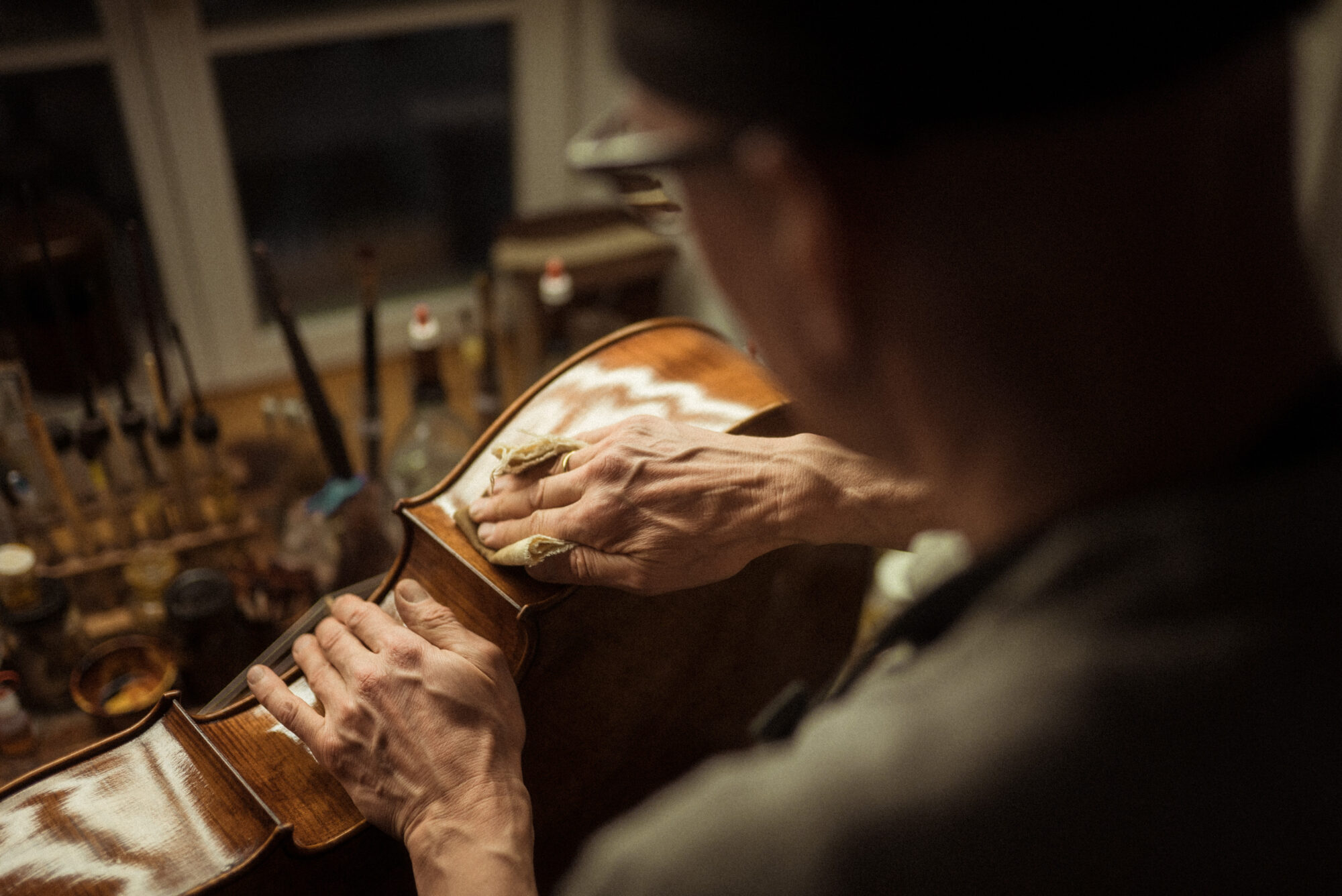
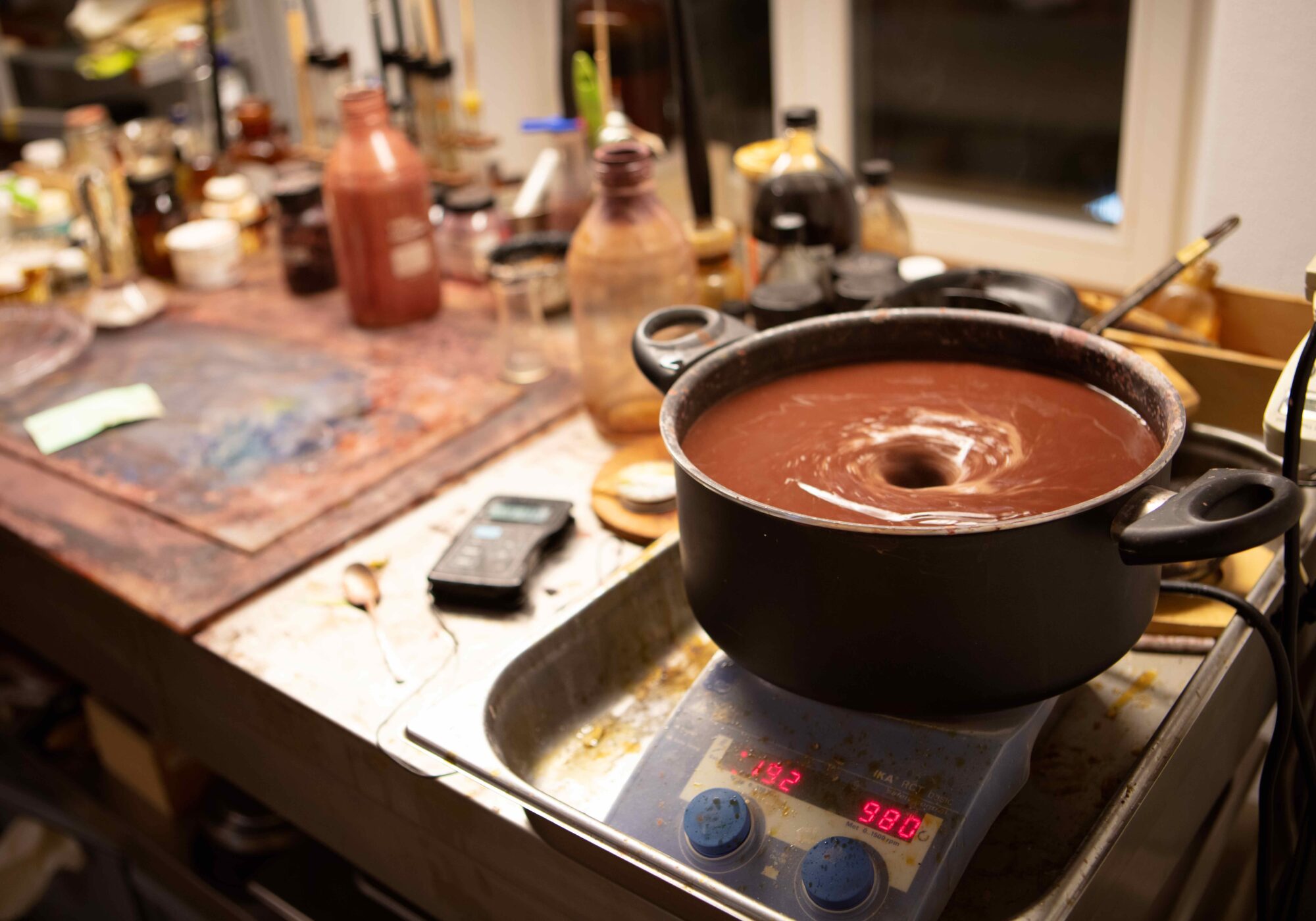
I take the utmost care in crafting my pigments and varnish formulations. It is fascinating to create varnish formulations and pigments from a wide variety of natural resins, roots, and oils to enhance the beauty and sound of violins.
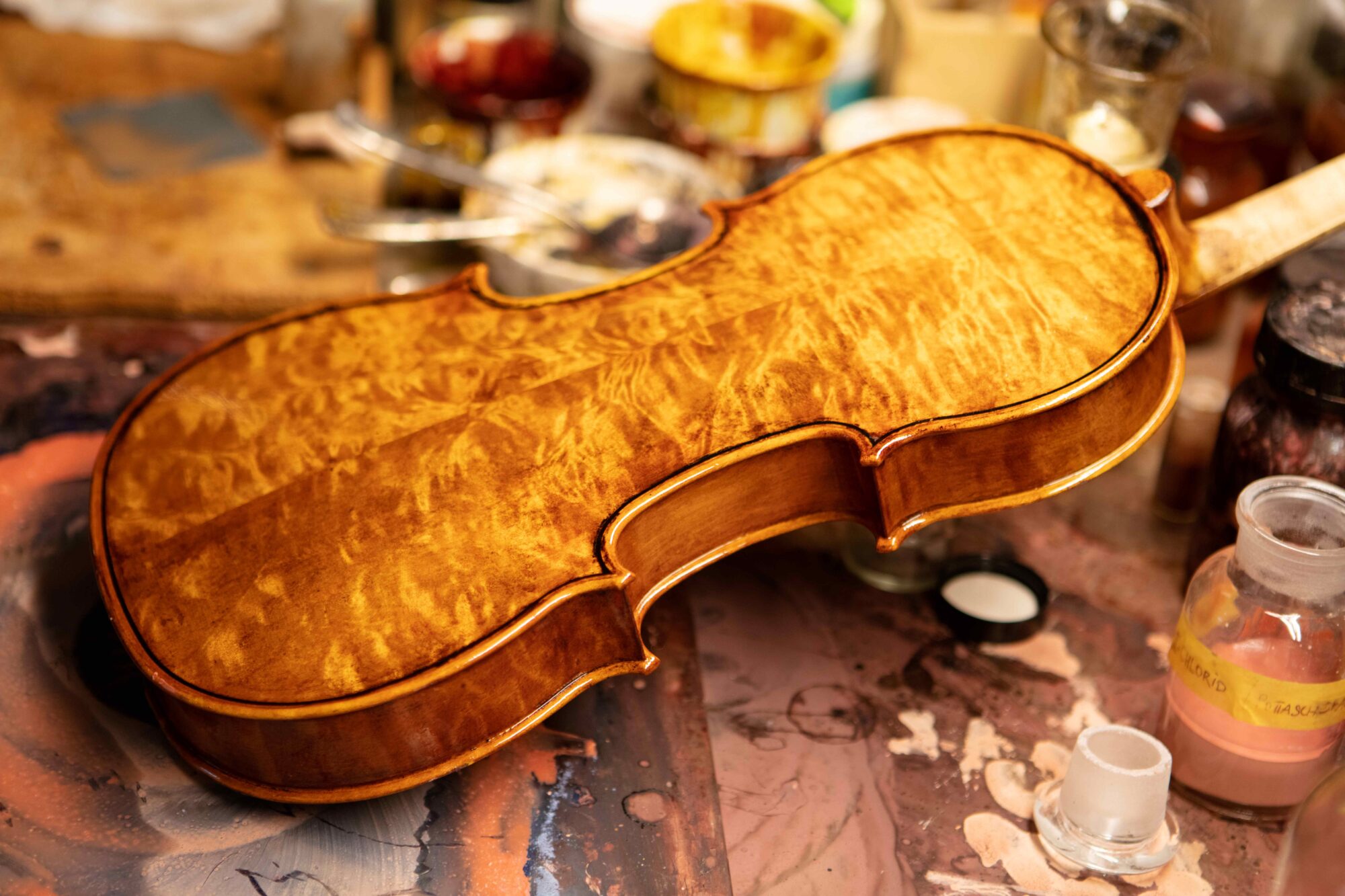
The artful finish enhances the instrument and transforms it into a distinctive sculpture. The finish, which is created over many weeks through a variety of layers, lends the instrument its dignity.
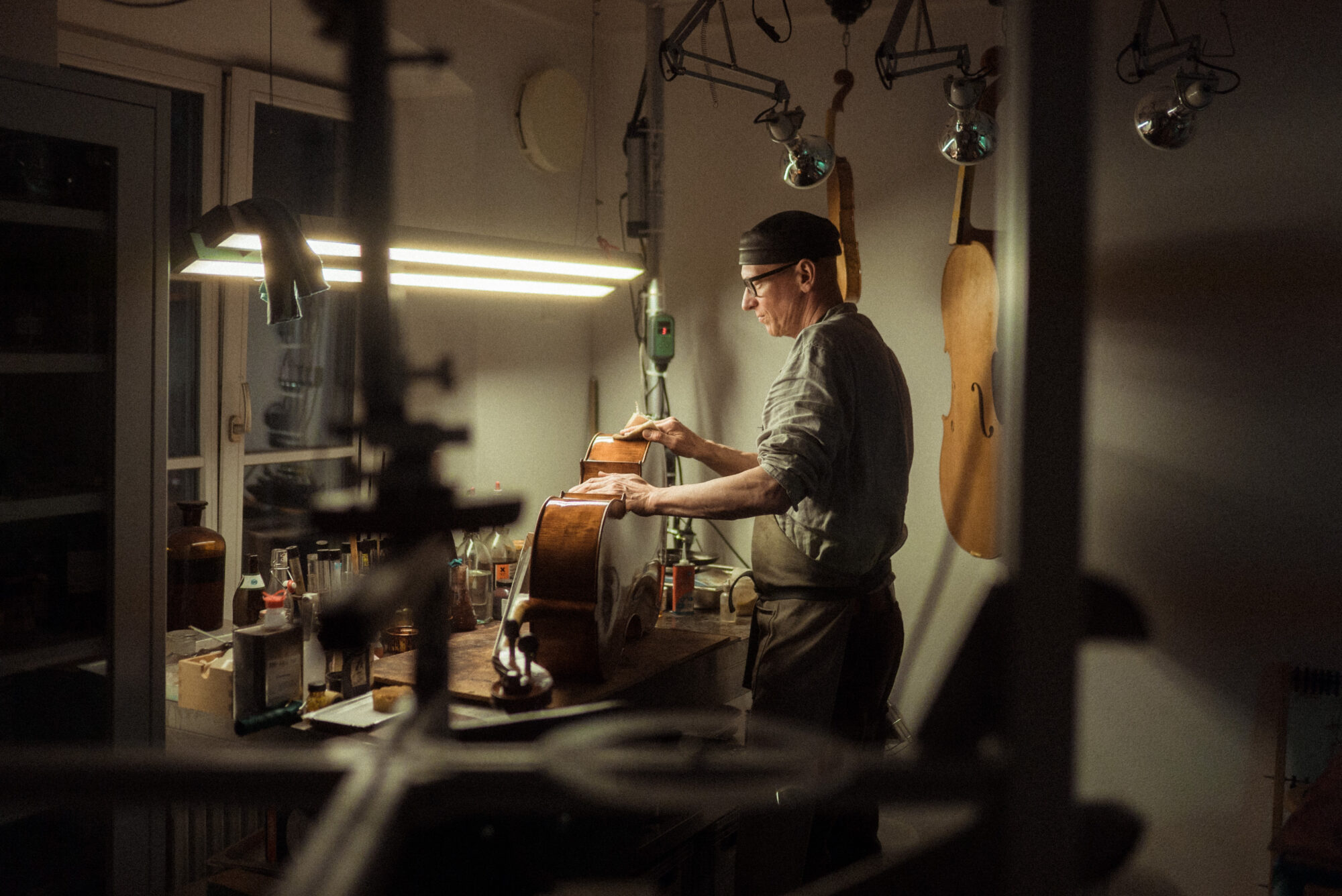
In the paint booth with the newest Cello. Buffing and polishing the paint layers.
Sound Settings
Adjusting the tone of the instrument on the top floor of our workshop building. As a violin maker, I am, in a sense, a sound therapist for the instrument.
The Marginal Work

With my instruments, I employ a method of edge finishing that is unique in violin making:
We craft the surrounding rim from a single piece of deeply flamed acacia wood. In Hebrew tradition, the acacia is regarded as the tree of hope. For us, this distinctive edge work has both mythological and artistic significance. It is the personal, unmistakable signature we impart to our instruments. Not least, this edge work lends the high registers of our violins their special tonal brilliance.
To make the turn appear faster and build suspense, the inside tips follow the outside turn, aiming toward the smaller radius of the C-curve.
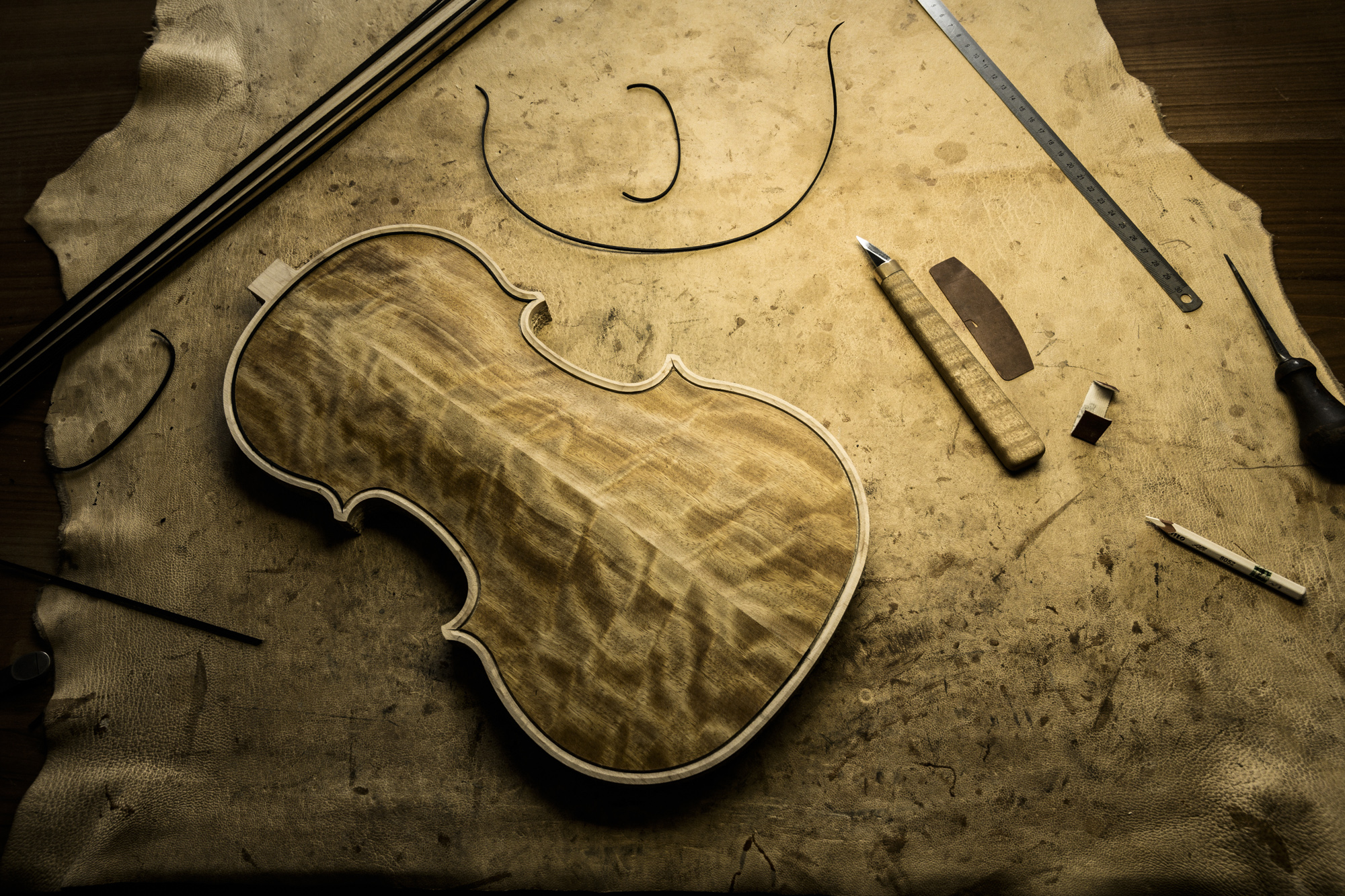
Details of our edging: The top and bottom are framed by a single-piece, all-around maple or acacia edge. To avoid a cluttered look, the chipboard itself is then finished in a single piece of black.
The Fundamental Tones
The wood’s own tones are like heart sounds. Through them, the wood tells me what kind of finishing it needs. That’s how each violin develops its own distinctive personality. The wood has a say in the matter.
Building a violin is a lifelong lesson in inner listening. Listening is a constant companion throughout the process.
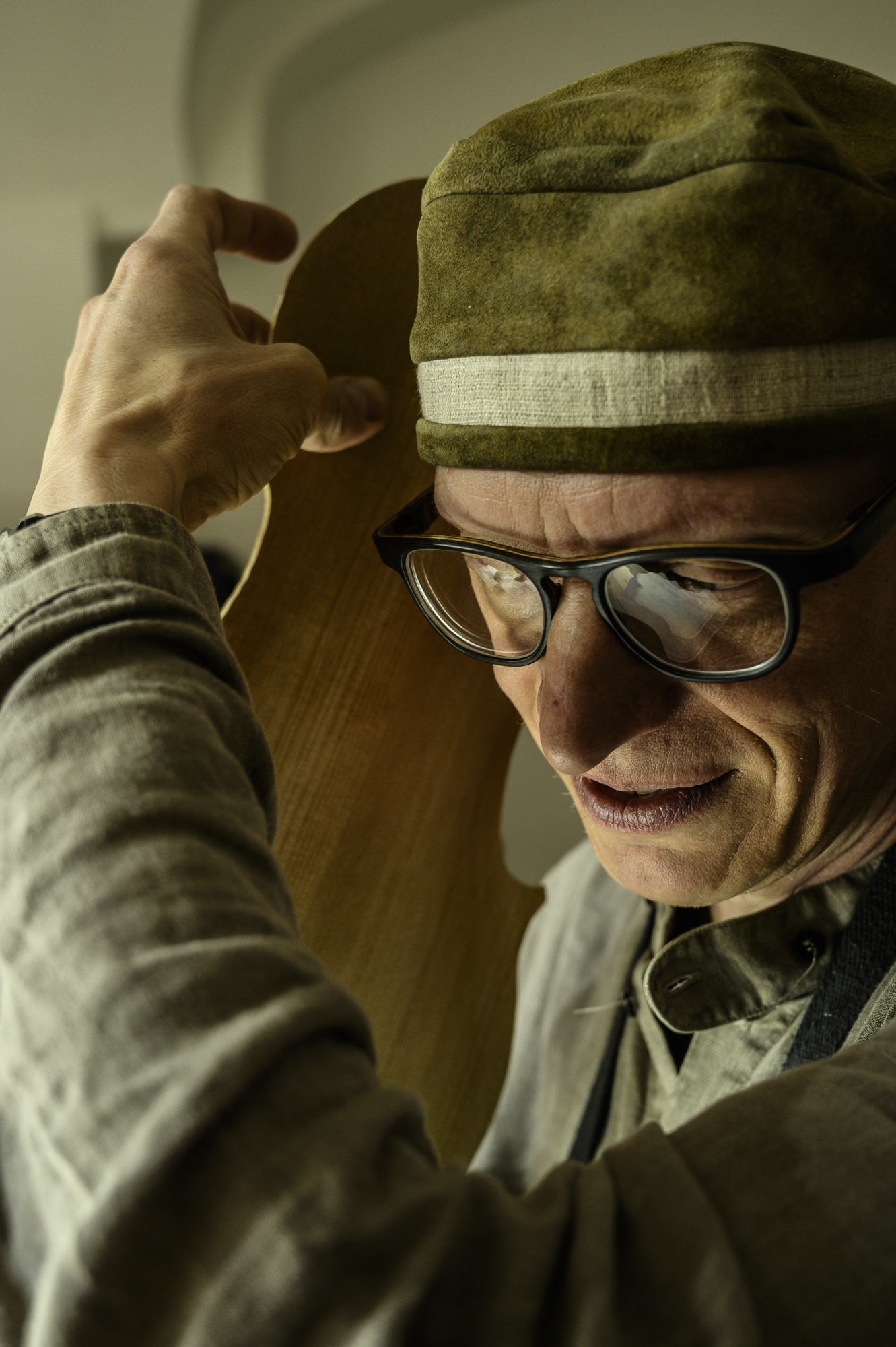
What is the craftsmanship behind my instruments?
Don’t work just to get the job done, but because you enjoy the process. Only then will the tool guide your hand.
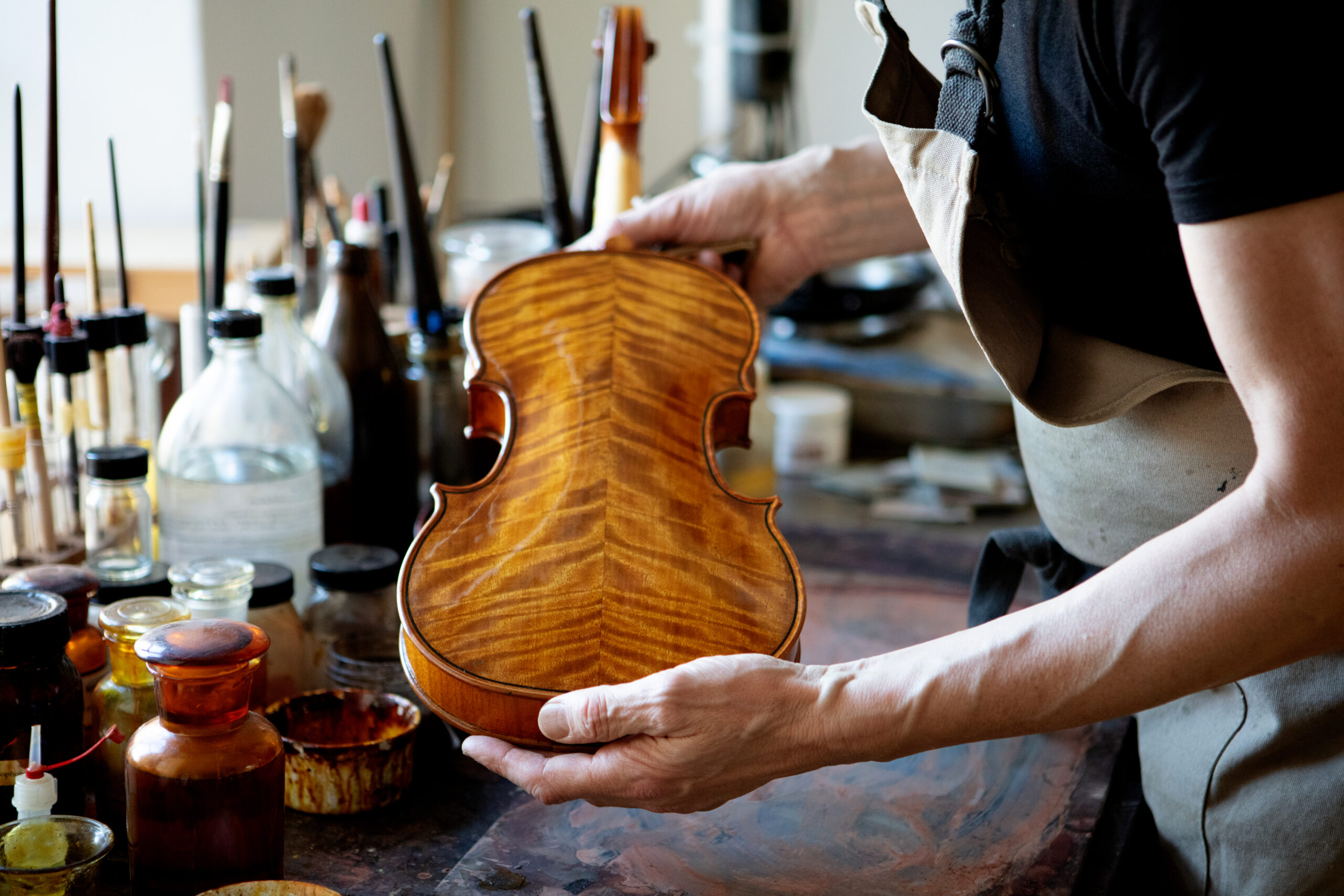
The back wood of this violin features an extraordinary tiger-flame pattern. Some of these rare pieces are still in our wood stock.
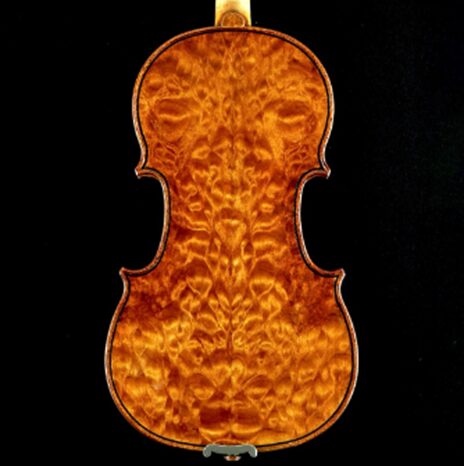
A typical example of our violins: instruments with a strong emotional resonance. The back is made from a rare find of deeply grained shell horn.
The finished, varnished violin is fitted with its fingerboard, sound post, pegs, and bridge. Then the strings are strung. It is the final step before its “birth”: the first note.
The distinctive hallmark of my instruments: The deeply flamed cello back is set into a border made of acacia wood.
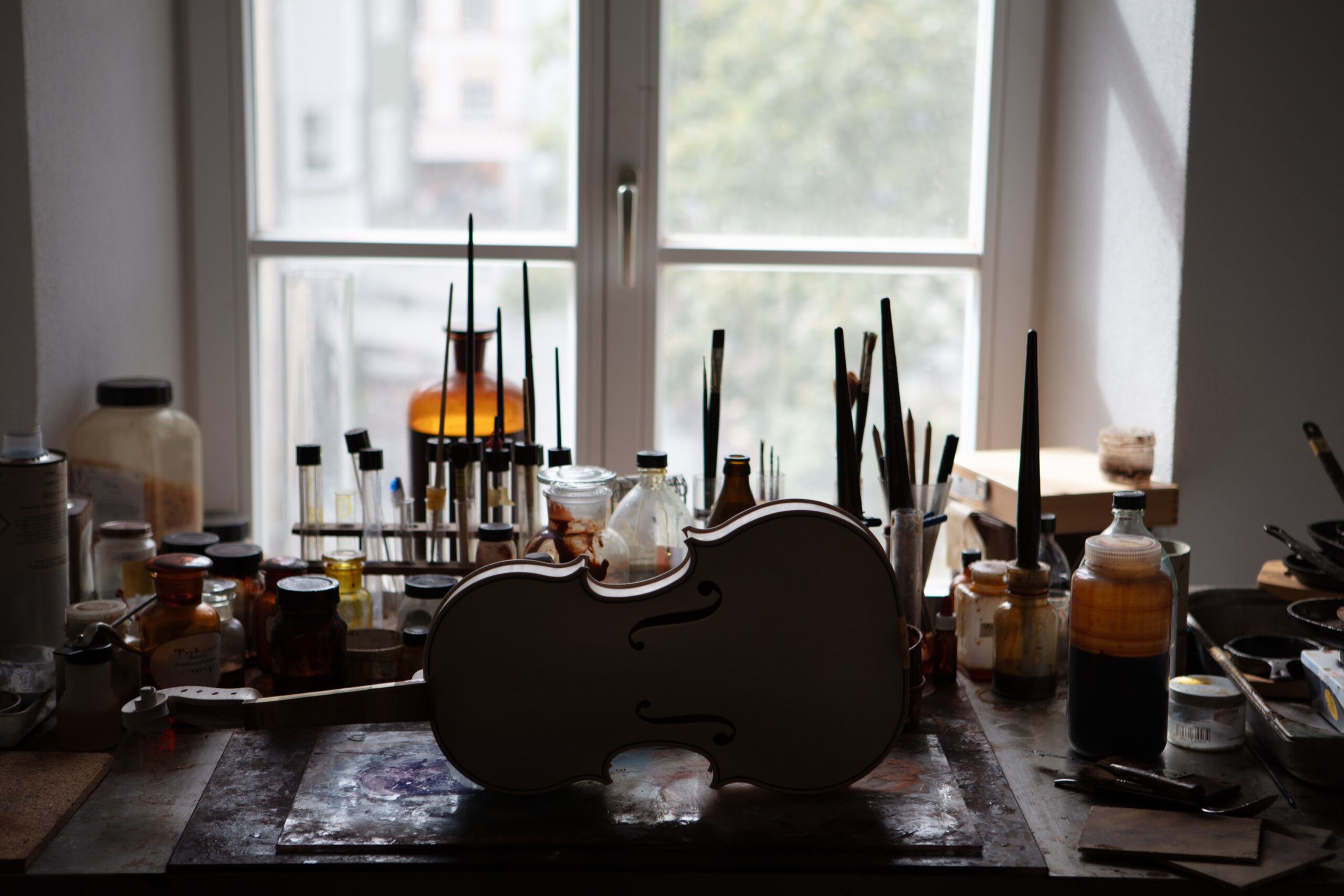
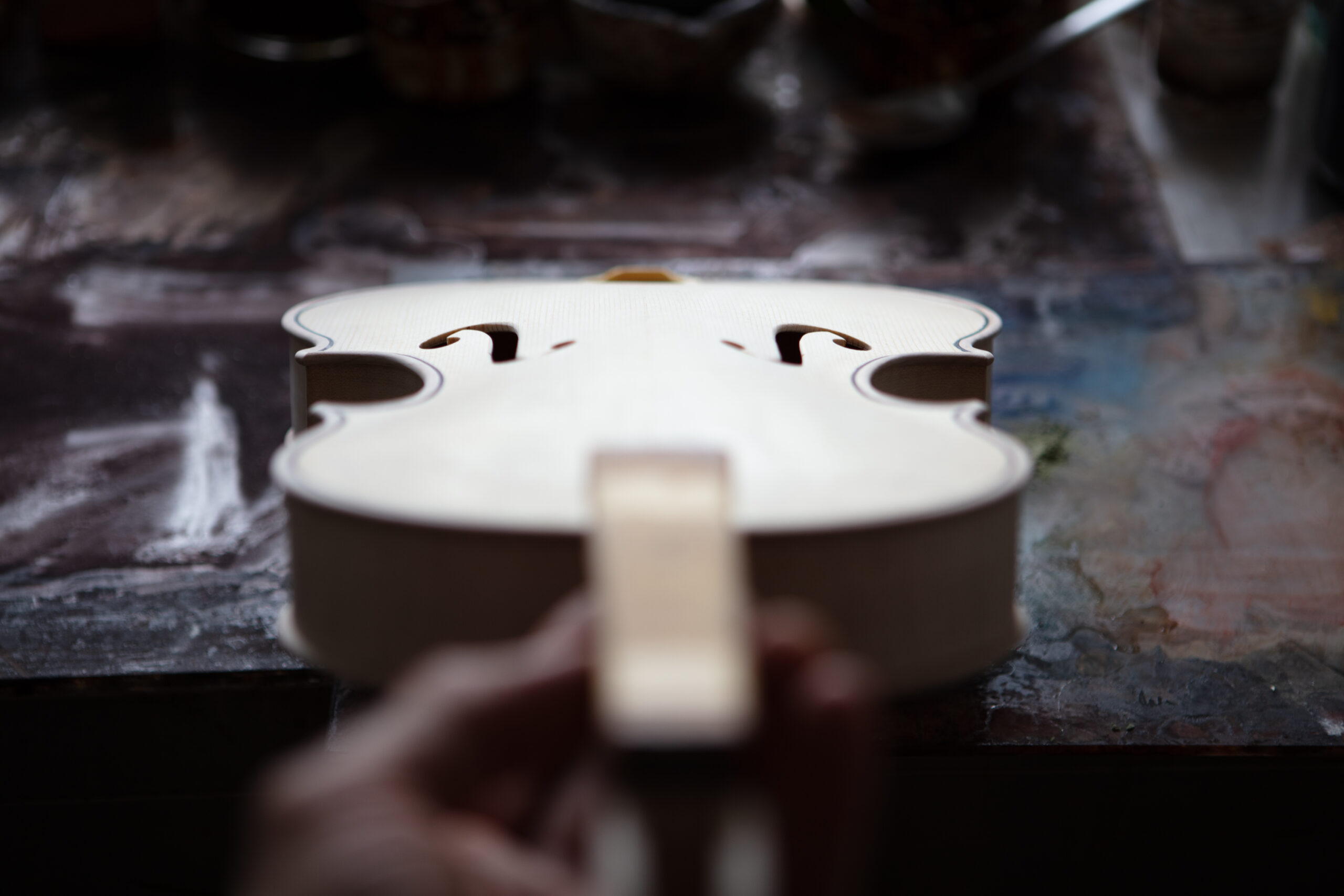
The viola is still untreated—it has neither been primed nor varnished. In the varnishing room, it will now be given its distinctive finish.
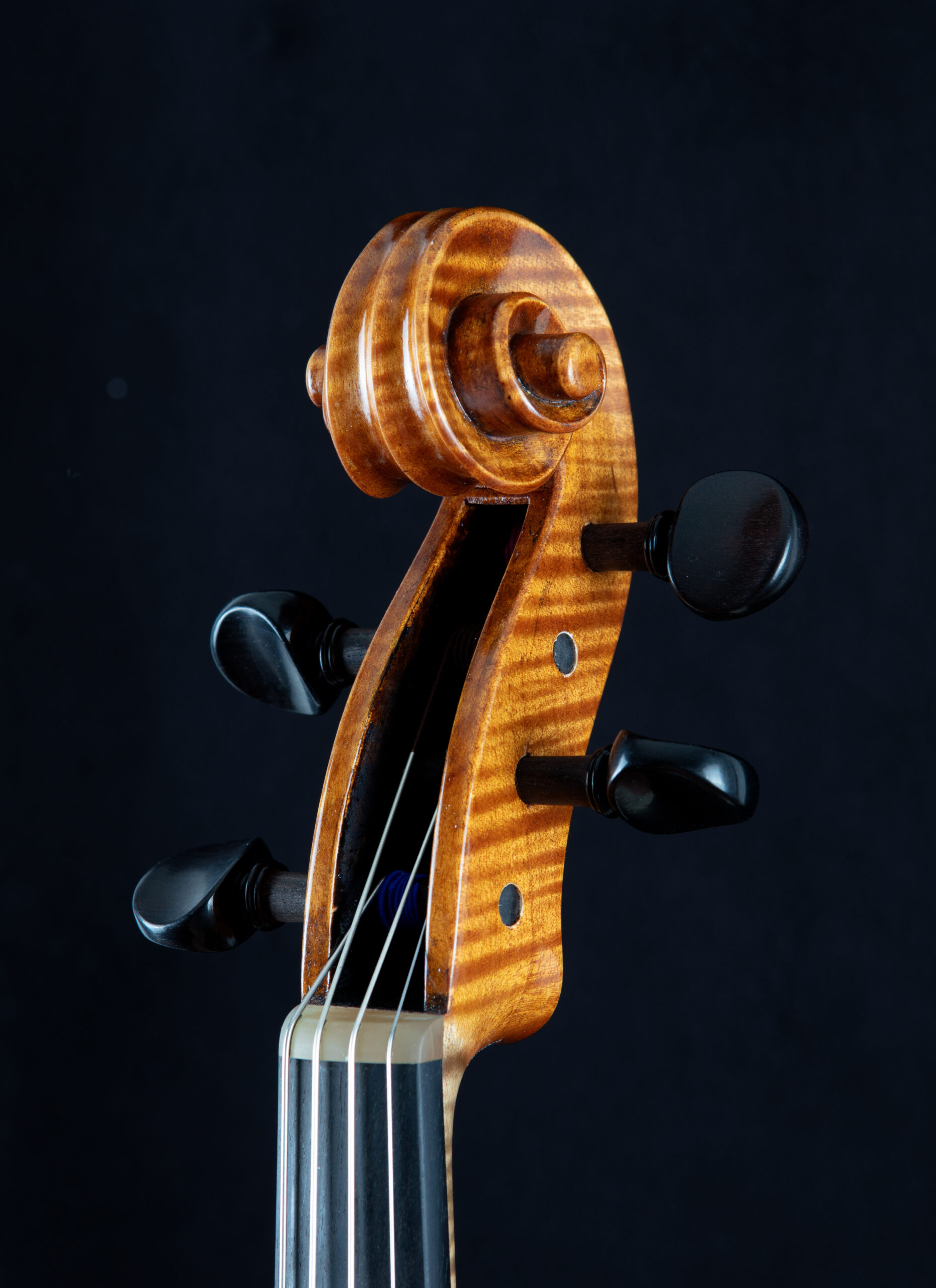
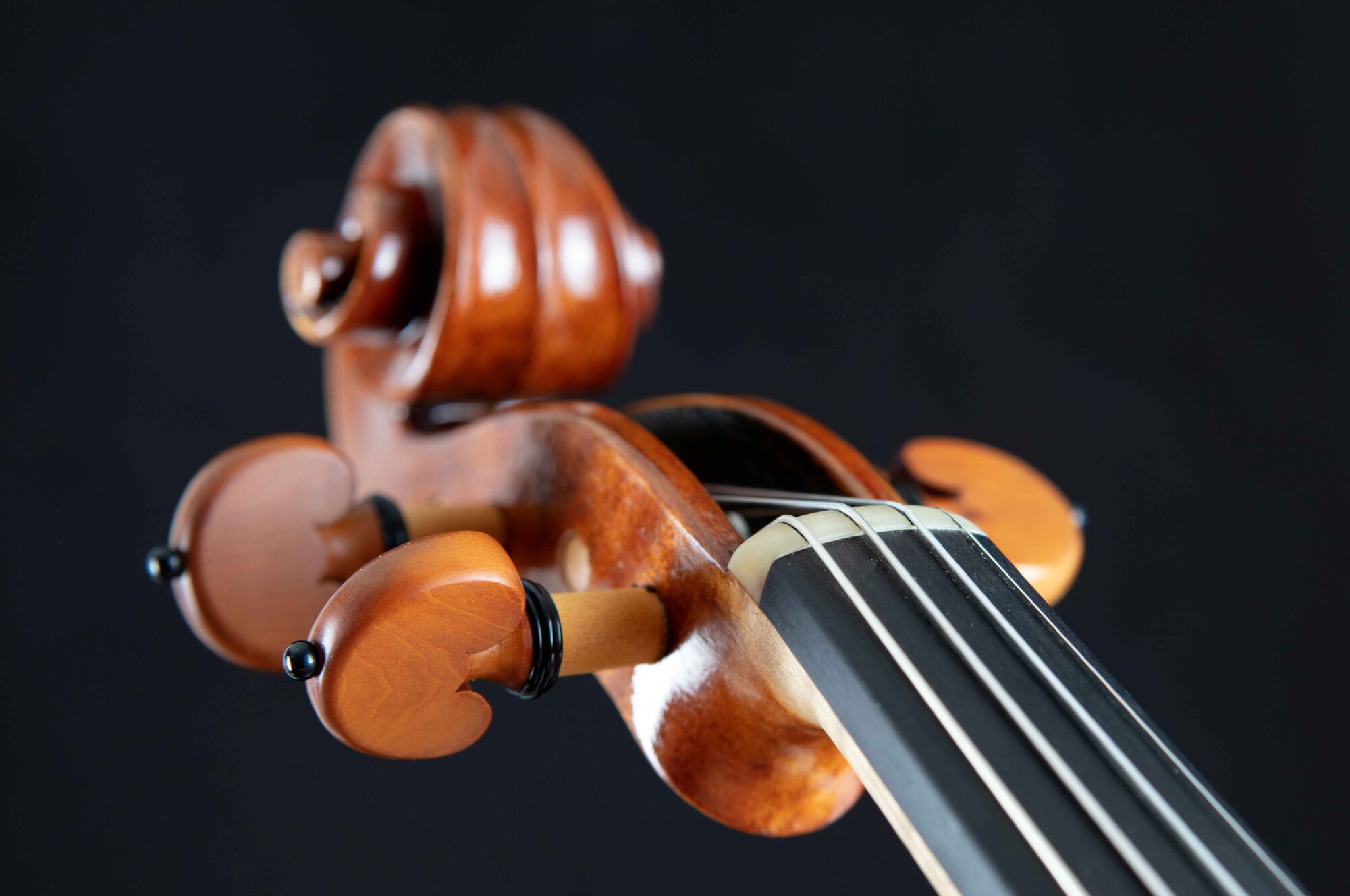
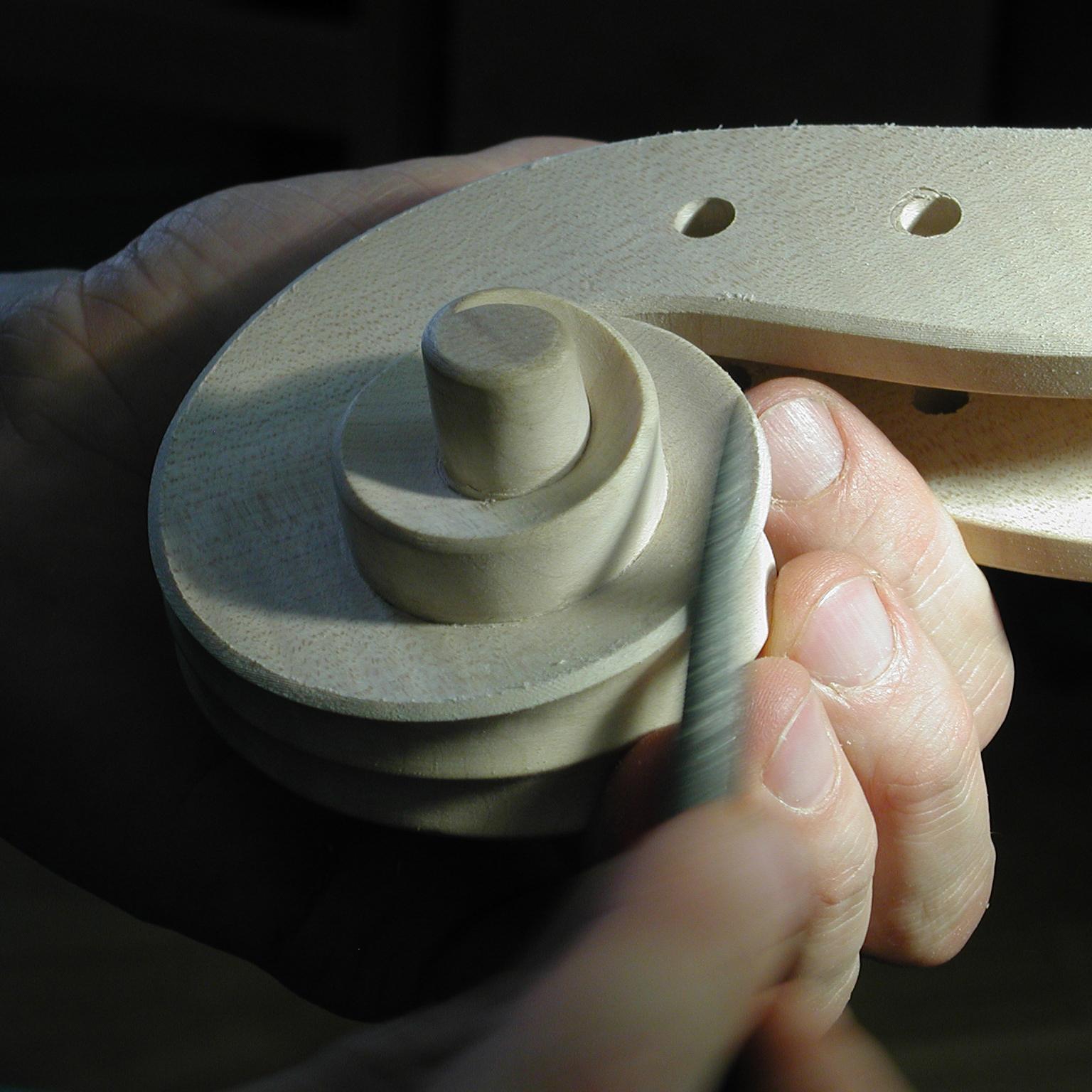
The snail reveals the master’s signature in a unique way.
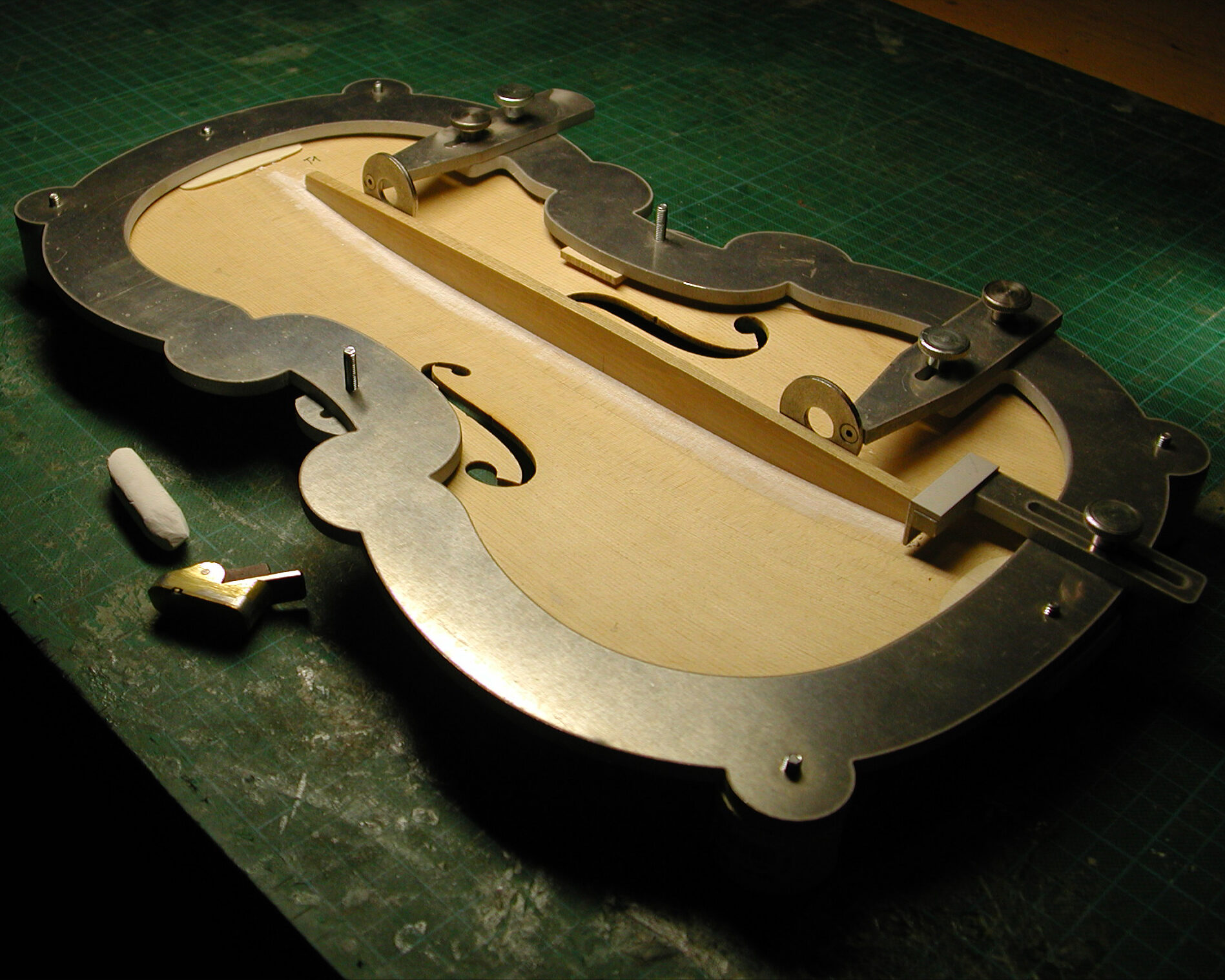
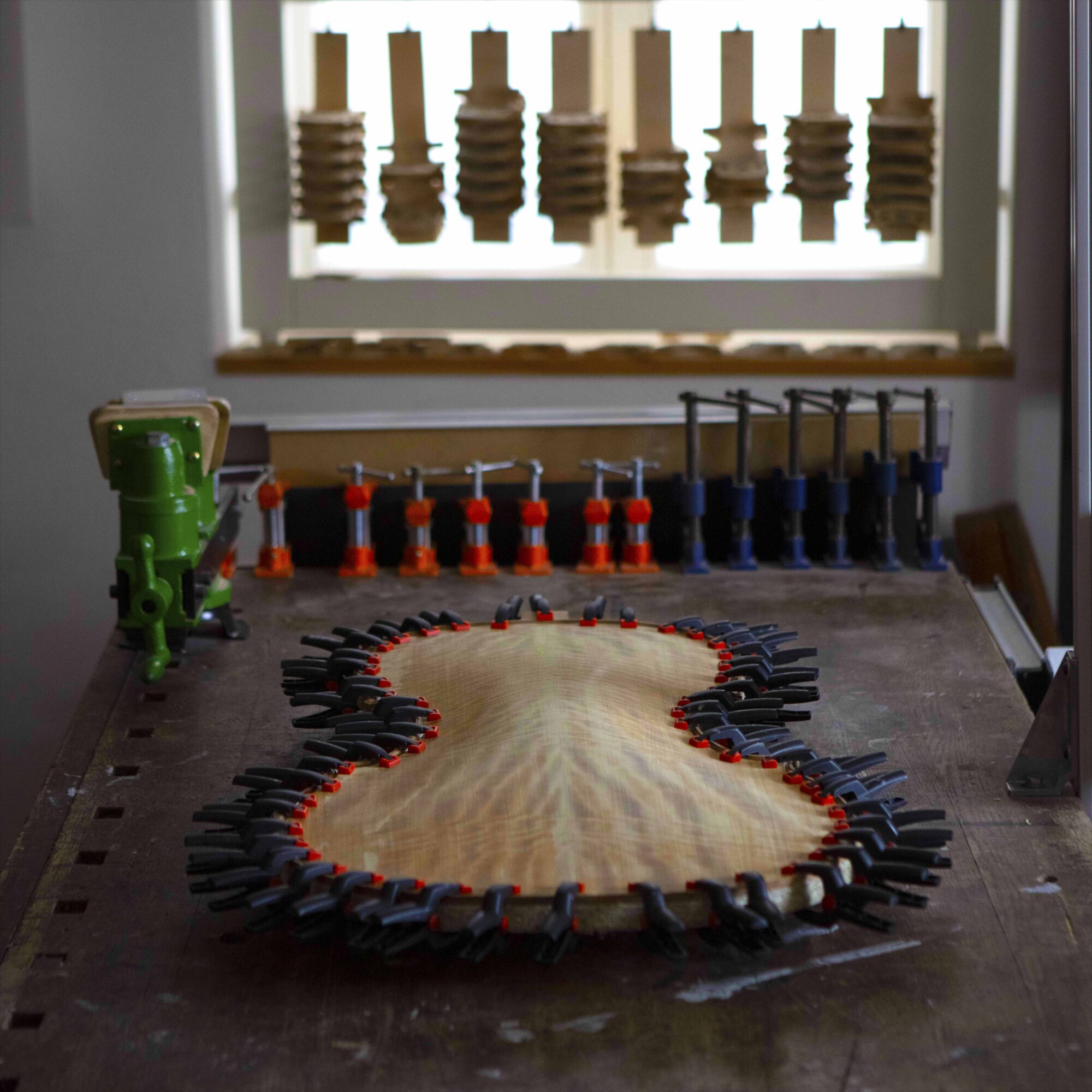
The small tool designs and jigs from my workshop. Here: an aluminum clamping frame (laser-cut) to make fitting the bass bar more enjoyable.
Details
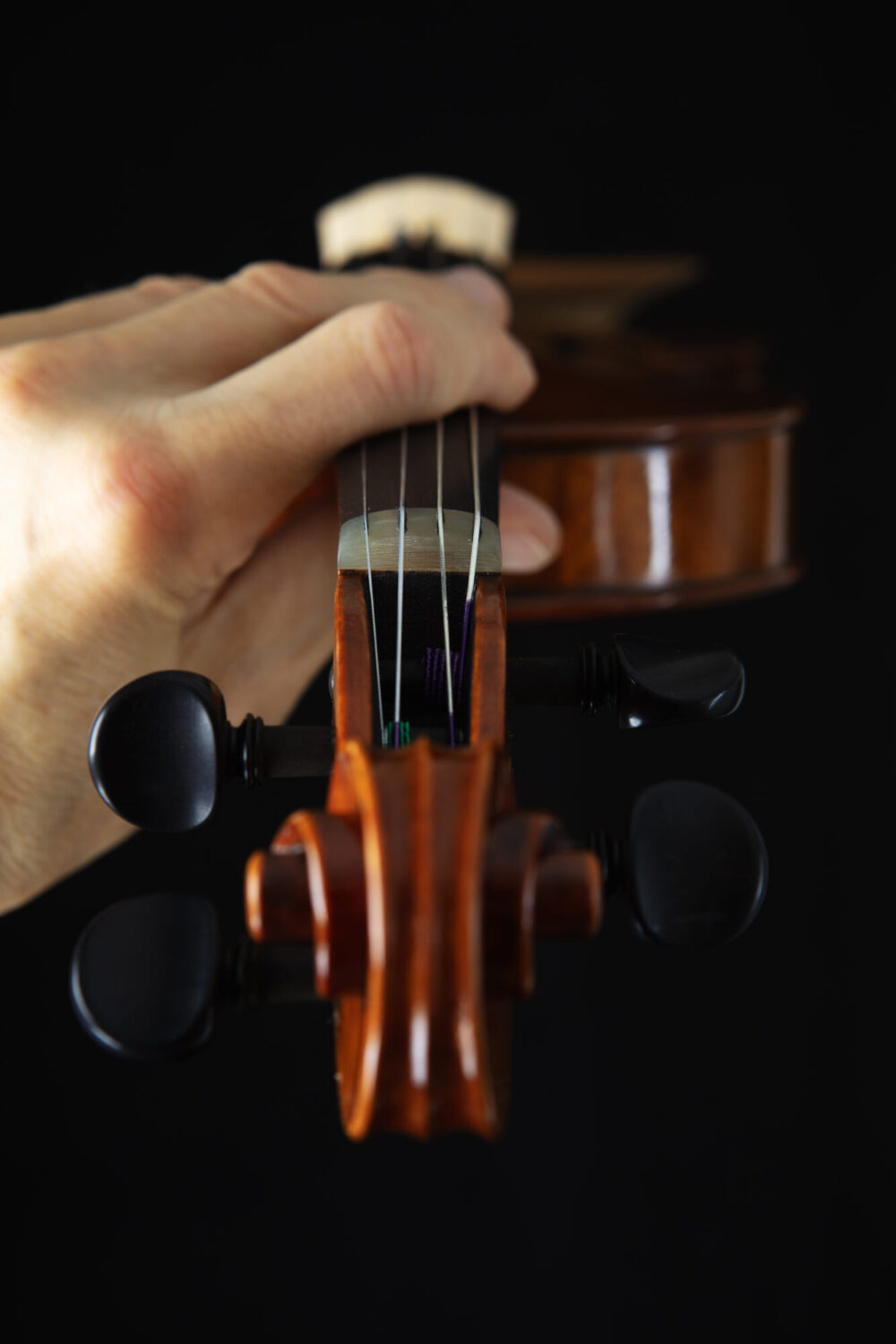
One of our unique features: For aesthetic and mechanical reasons, we craft the nut for our instruments—unlike is customary—not from ebony, but from white African Watussi horn. This material, traditionally used for carving delicate figurines, is slightly translucent and has greater strength than ebony—a quality that is advantageous for the string notches.