Acoustic resonance analysis is far more than just a measurement method—it is an “ear” for sound. In my workshop, it was developed as a diagnostic tool that accompanies the creative process of building violins, violas, and cellos. Resonance analysis opens our eyes to the deeper acoustic secrets of the instrument and takes violin making to a new level.
Our resonance analysis method makes it possible to represent the sound emitted by the instrument in a way that is true to the ear. Both the instrument’s individual resonance profile and the excitation patterns of the human inner ear are visualized using color-coded maps.
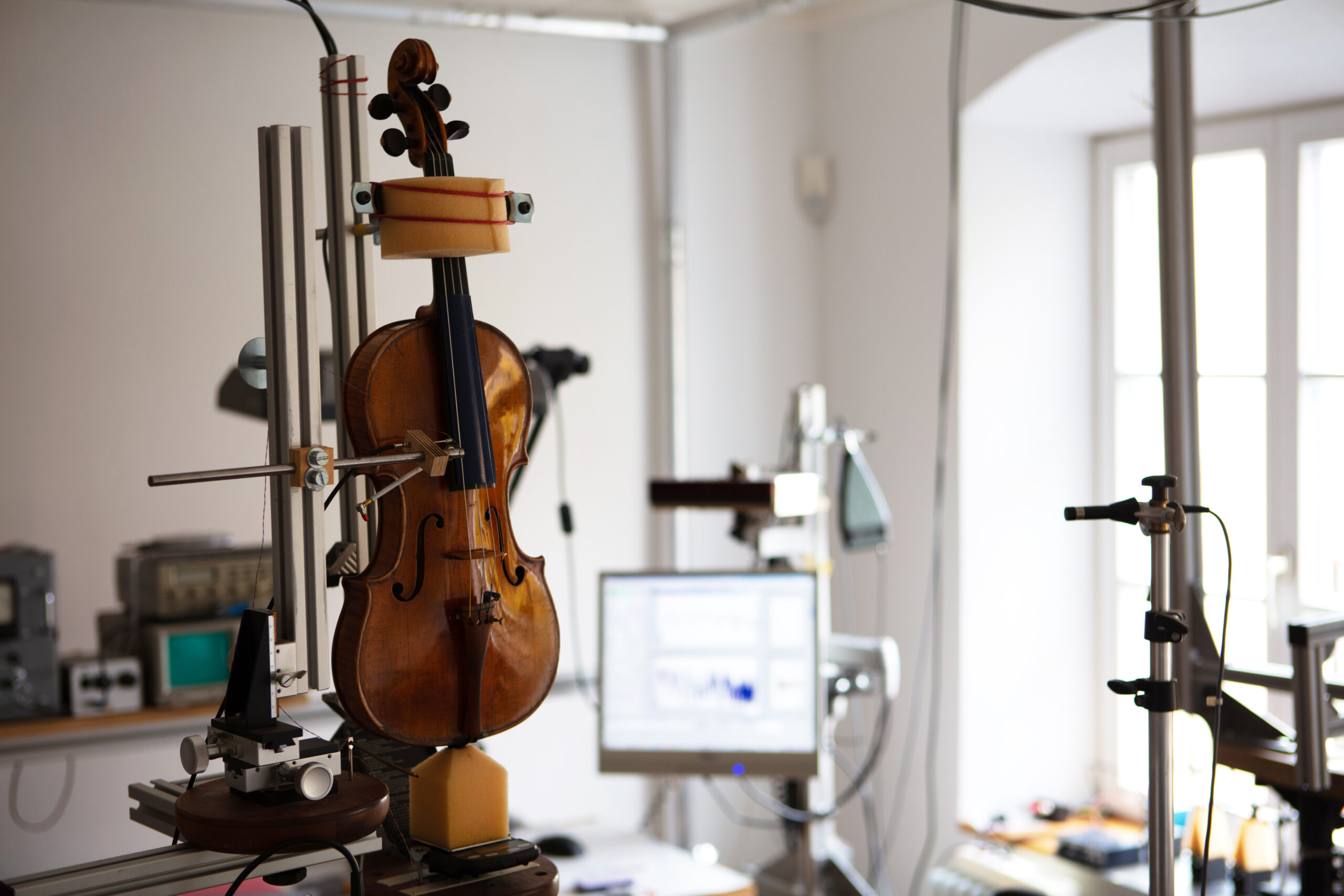
A violin by Antonio Stradivari from his “Golden Period,” Cremona, 1721. It is one of my reference violins, which I was able to examine for several hours as part of a sound adjustment process for acoustic analysis in my workshop’s research laboratory.
As a master violin maker and sound researcher, I find instruments with exceptional tone to be gifted teachers.
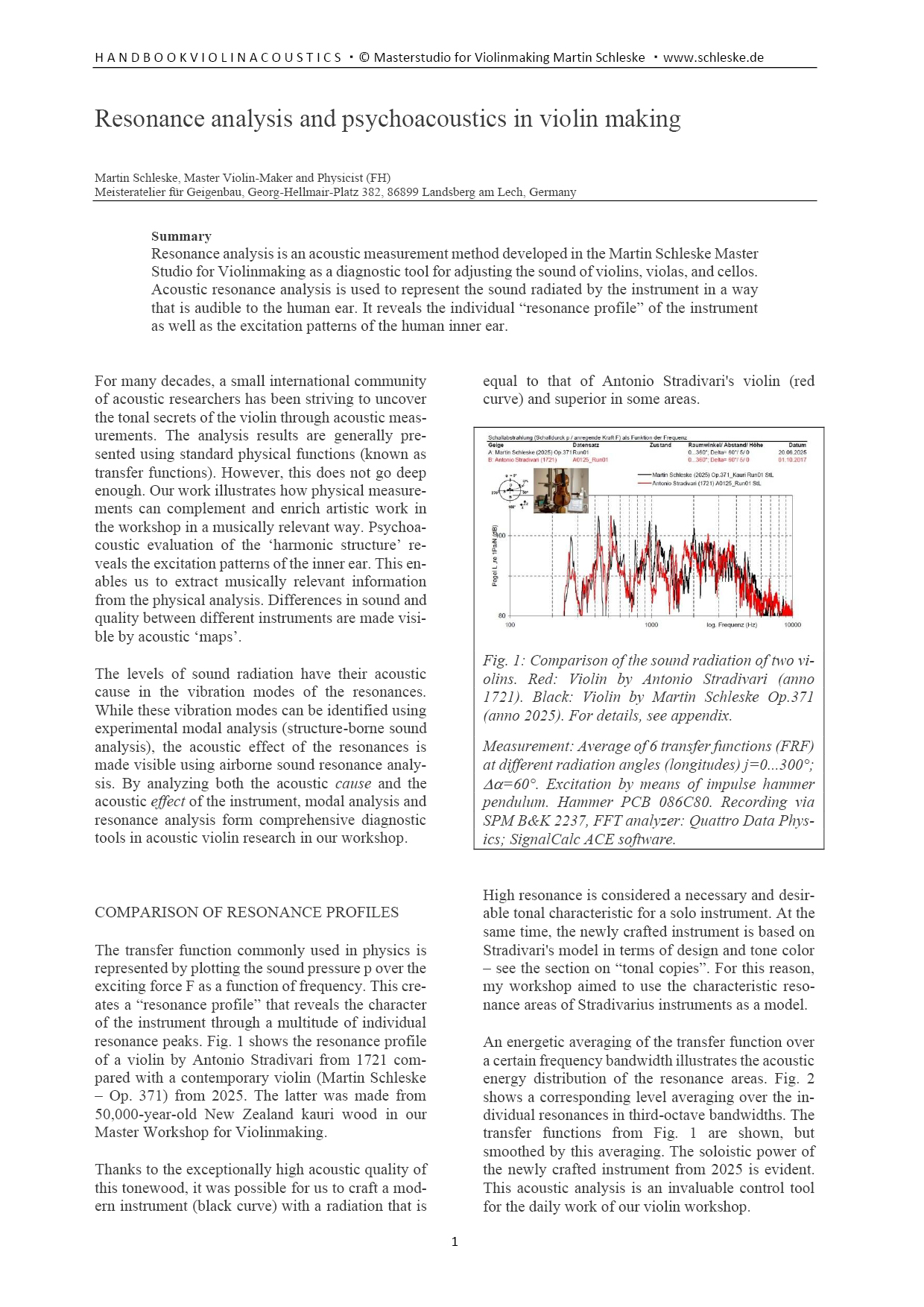
Resonance profiles (frequency response function, FRF) of two violins. The figure shows the sound radiation of a violin by Antonio Stradivari, dated 1721 (red curve), compared to one of our most recent violins (Schleske opus 371), dated 2025 (black curve).